PeriMove: adapting a home workout to how you feel today
Independent product project | Research, strategy & prototype
PeriMove is a web app that helps women approaching or experiencing perimenopause adapt a home workout to how they feel today. I built the prototype solo during the three-day Lovable SheBuilds hackathon in October 2026. I led the research, product decisions, design direction, exercise content and testing. I used Lovable to build the app, with ChatGPT and Claude supporting research synthesis, planning and review.
Swipe to see the full journey →
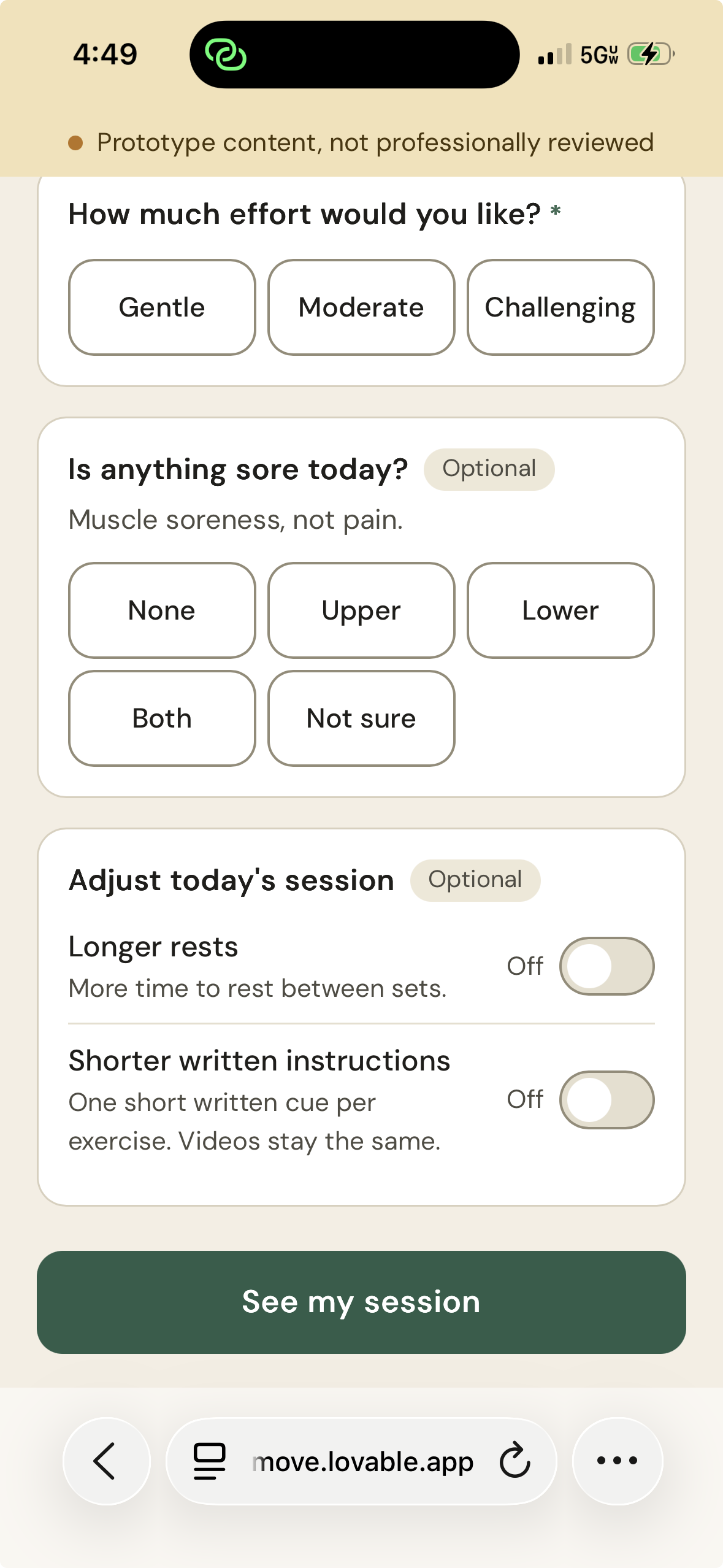
Image noteChoose today’s effort and optional adjustments.
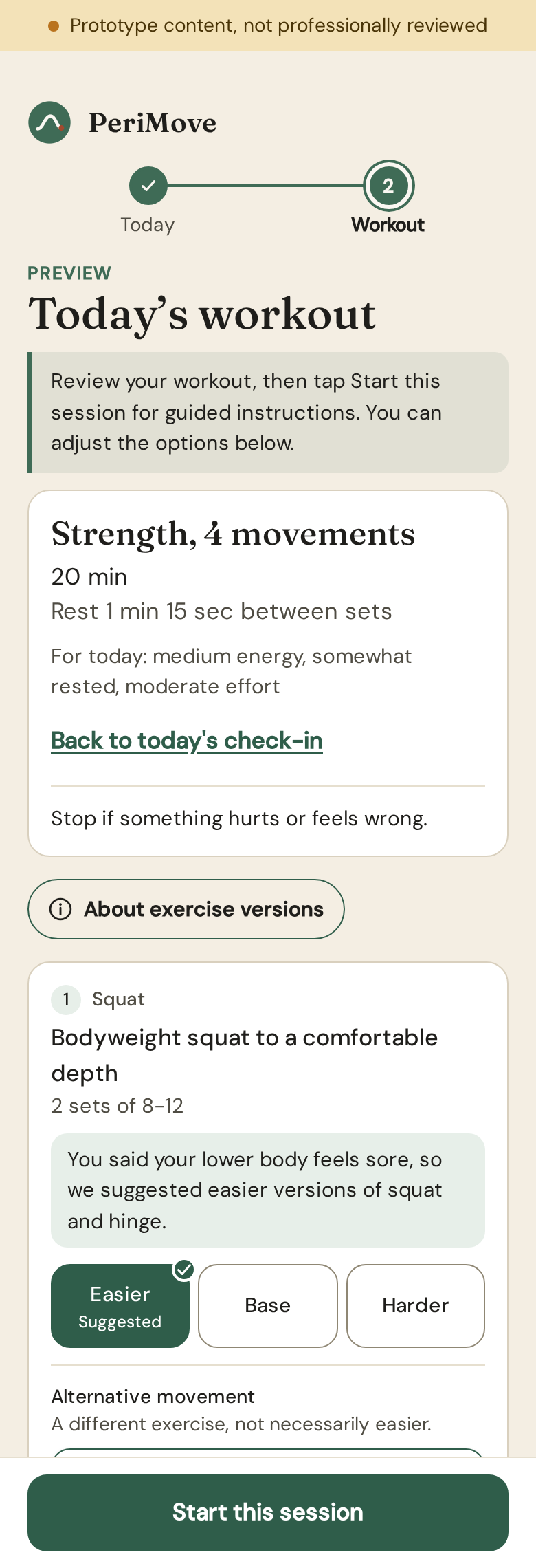
Image noteReview suggested versions and change available choices. Extended page view.
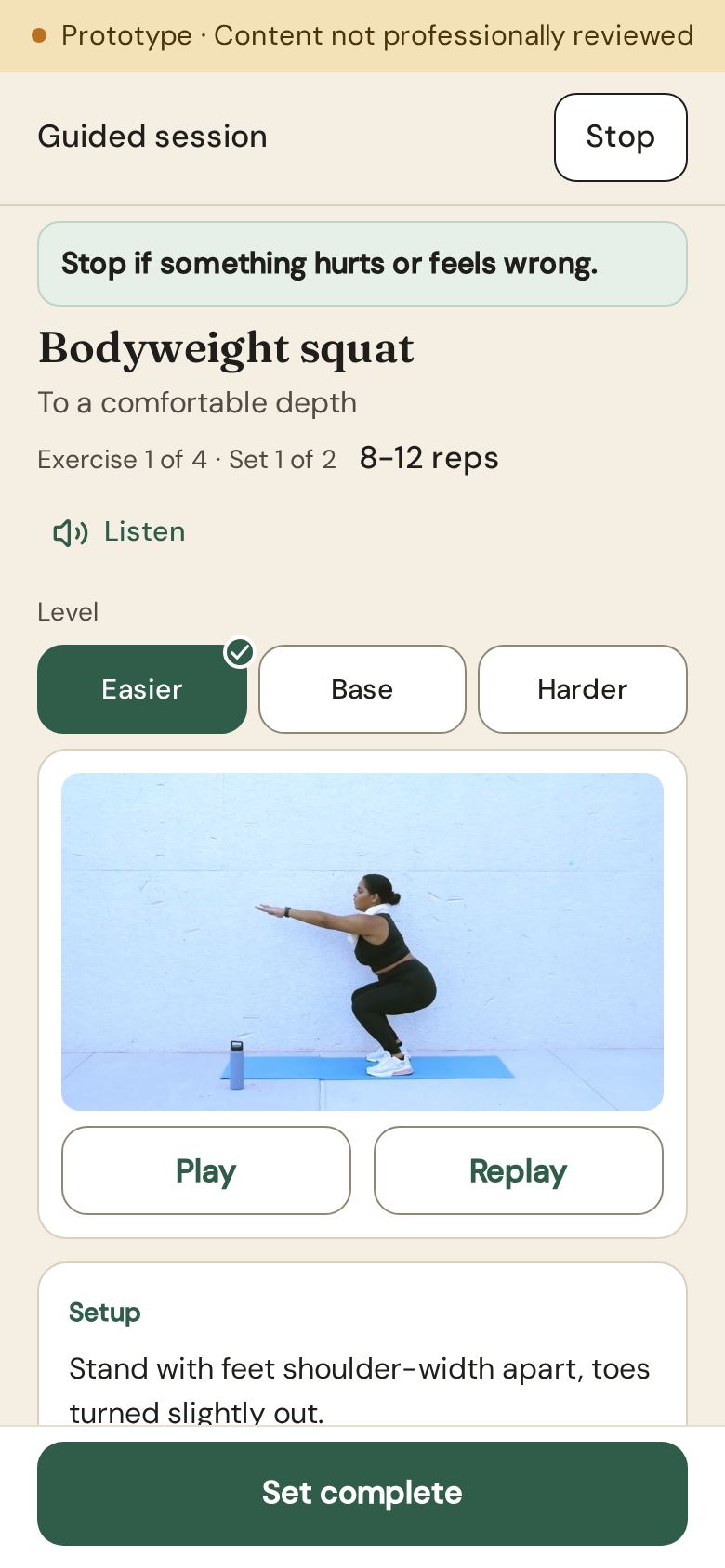
Image noteUse written cues, Listen and movement demonstrations.
1. The problem
Exercise plans can be hard to adapt when every day feels different. For many women in perimenopause, energy, recovery and symptoms can vary, and general advice is hard to turn into a decision on the day: follow the workout, make it easier, choose gentler movement or rest?
I focused on one practical job: help me decide what movement feels manageable today and how to adapt it.
2. What I heard
A self-selected survey of 40 people gave me a direction to investigate:
- 28 said they were approaching or experiencing perimenopause.
- 20 of 40 reported low confidence adapting a workout.
These were discovery signals from a convenience sample, not evidence of demand or health outcomes. The adaptation idea preceded the final survey; the findings supported exploring it.
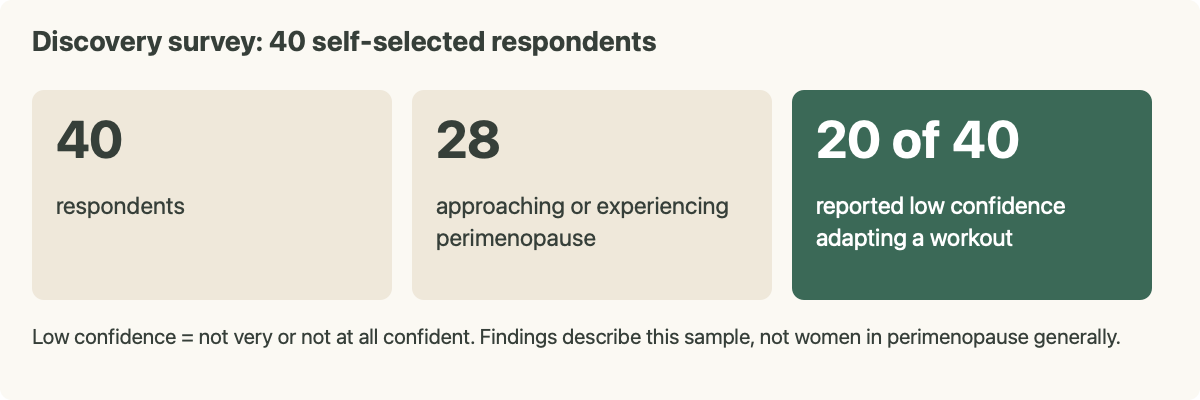
Image noteDiscovery survey snapshot: sample size, perimenopause self-identification and reported adaptation confidence.
3. What I built
My longer-term ambition was to help women build consistency with training that evolves over time. For the three-day hackathon, I focused on adapting today’s workout through one complete visit:
Welcome → saved setup → daily check-in → adjustable workout preview → guided exercise → reflection → closing.
The submitted prototype offered strength sessions of approximately 15, 20 and 30 minutes, plus gentle mobility of about 10 minutes. I deferred broader education about perimenopause and exercise because of the time constraint and because I had not secured enough expert sources or professional review to support it. I did include a small set of source-linked general tips on consistency, strength and recovery. A fixed rule chose the tip from saved goals, with a session-type fallback; it was not ongoing coaching or a broader education feature.
Choosing rules over runtime AI. I used explicit recommendation rules and a small curated exercise library rather than AI-generated workouts. This made the behavior easier to inspect and test within three days, with limited variety as the trade-off. AI supported development; it does not generate workout recommendations or advice in the app.
I kept access account-free, with setup saved in the browser to reduce repeat questions. Daily answers, workout progress and reflections are held in memory only. The trade-off is no workout history, cross-device access or adaptation across weeks.
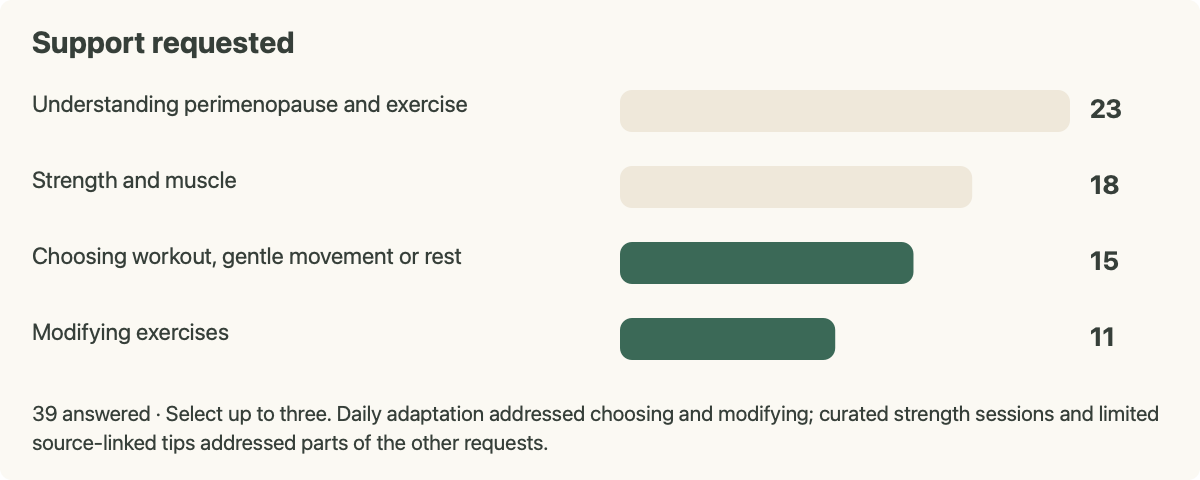
Image noteSupport requests and the scope choice: daily adaptation, curated strength sessions and a limited educational layer.
4. What testing changed
Six usability sessions, five with people in or approaching perimenopause, and a separate product review informed changes to the journey. The evidence included observed confusion and stated ideas. Some findings followed moderator prompting, the earliest records were short summaries, and two testers did not reach reflection.
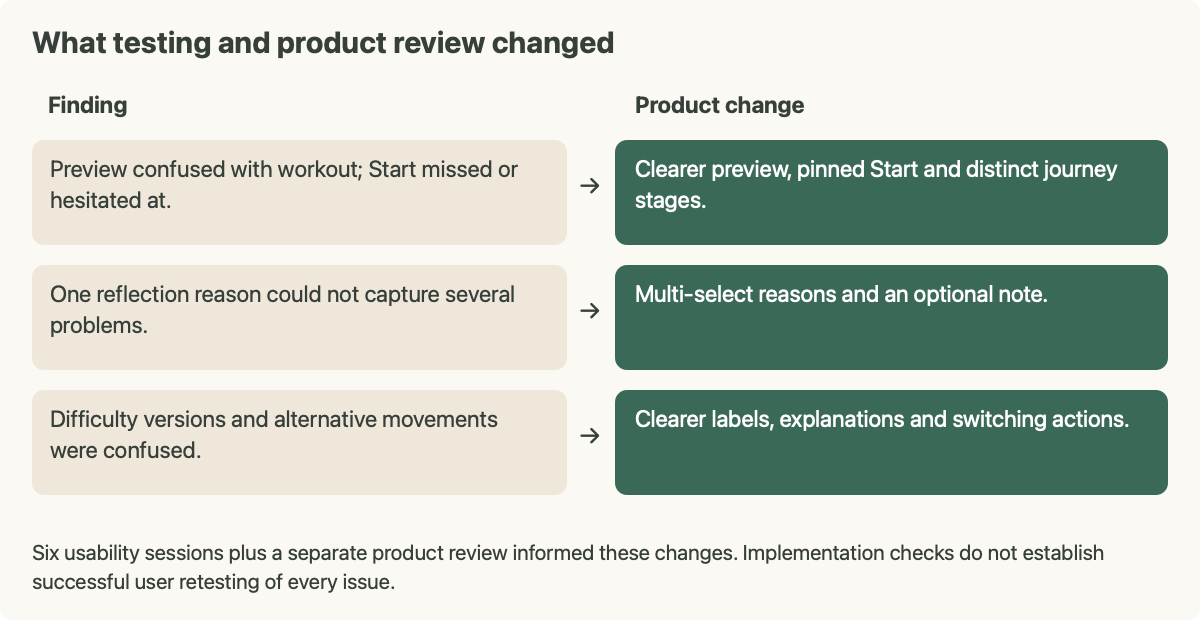
Image noteThree documented findings and the product changes they informed.
Make the preview recognizable. People missed or hesitated at Start, and the recommendation was not consistently understood as a preview. I clarified the workout summary, simplified the gentle overview and pinned Start. The priority was making the transition from choosing to doing understandable.
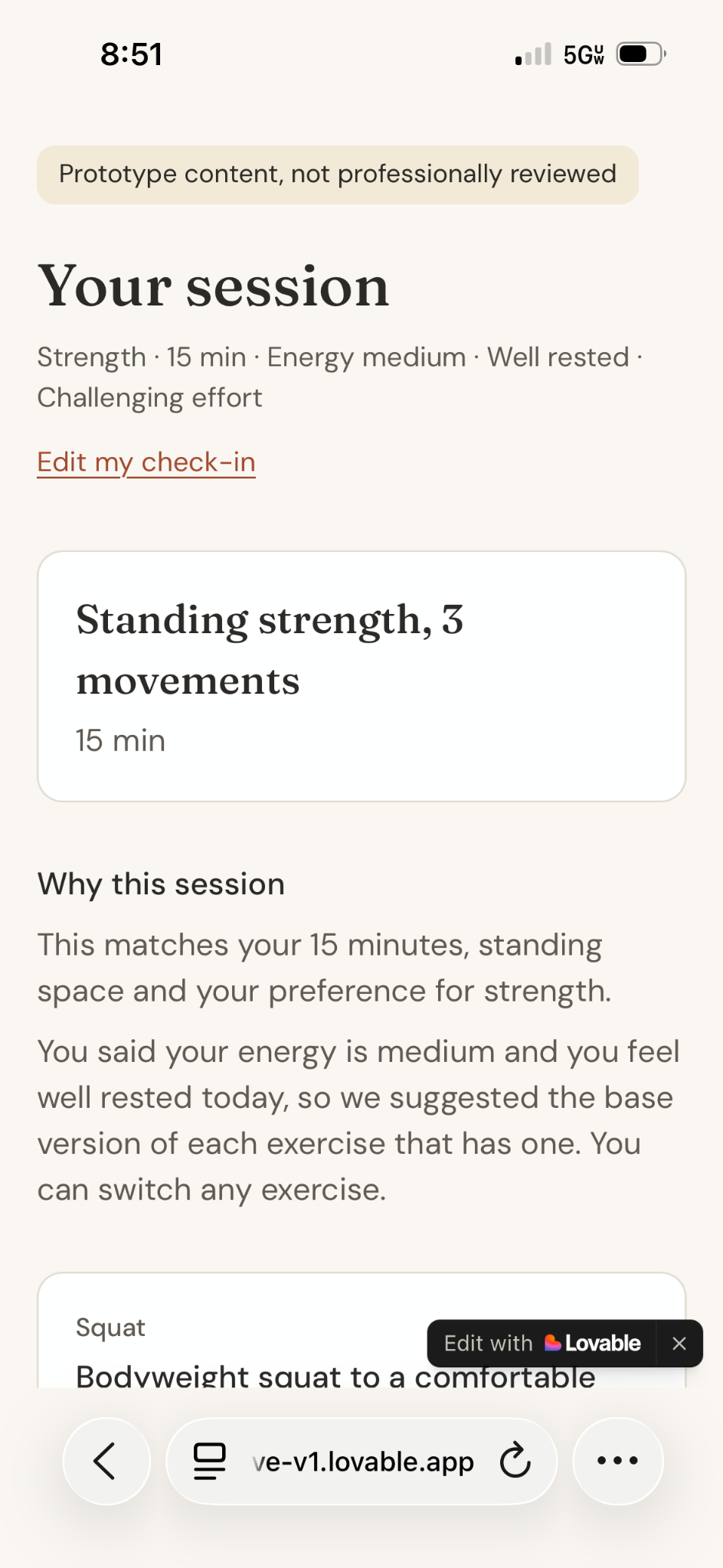
Image noteEarlier preview: the page was titled “Your session,” and Start was not visible in this captured view.
Image noteSubmitted preview: explicit preview wording, a summary of today’s choices, an explanation beside the affected exercise and a visible Start action. Extended page view.
These captures show different sessions and viewport sizes. They illustrate the design changes rather than a controlled comparison of the same workout.
Let reflection capture several problems. A single-choice reason could not describe several things that did not fit. I changed the reasons to multi-select and added optional text. Selections could also be reversed, which I checked separately on my phone.
Distinguish a version from a different movement. Exercise difficulty versions and alternative movements were confused. I clarified labels, explanations and switching actions so the distinction was explicit. A related product-review finding exposed lost customization when switching away and back; valid choices were restored, with a separate fix to reset stale choices after meaningful check-in edits.
Testers also raised spoken guidance. I tried it on a limited basis, checked it on my phone, then expanded support. Five demonstration clips and clearer placeholders supported the written instructions.
I prioritized an understandable end-to-end experience over adding more sessions. These changes shipped and received implementation checks; the records do not establish that the same participants successfully retested every issue.
5. What comes next
Before wider use, the exercise content needs professional review. A multi-day study could then investigate whether the check-in and adaptation choices fit people’s real routines and whether they return.
The longer-term vision includes training that evolves across perimenopause and education about perimenopause and exercise, supported by expert sources and professional review. These are directions to explore, rather than built capabilities or validated demand.